
October 15, 2026
5 Essential Tips for Photo Booth Space Requirements
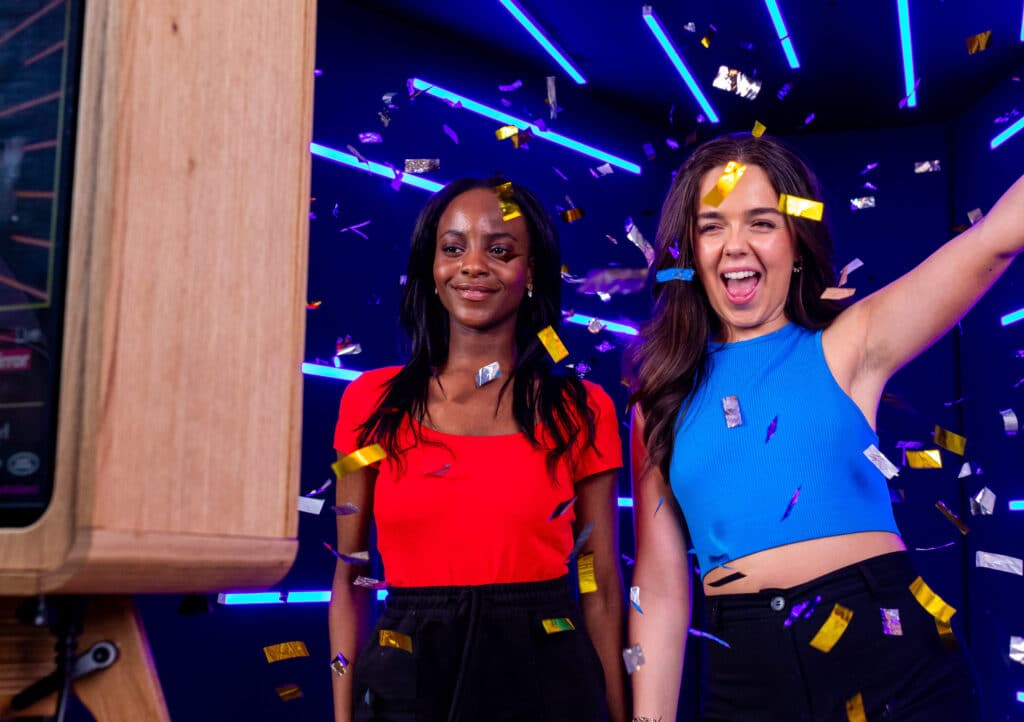
Your venue looks perfect and guests are arriving. Then you realize the photo booth is squeezed beside a doorway, the queue is blocking the bar, and there is barely room for a group shot. Checking your photo booth space requirements before you book prevents all three problems.
Whether you are planning a wedding reception, corporate event, or private party in Washington, DC, these five tips will help you find the right spot. You’ll learn how much room to reserve, what to check with your venue, and how to match the setup to your guest count and layout.
Understand Photo Booth Space Requirements Before Booking
Photo booth space requirements start with the booth’s footprint. Most standard open-air photo booths need at least an 8 ft × 8 ft area, while a 10 ft × 10 ft space offers more flexibility. A 360 video booth generally needs a larger footprint, with 10 ft × 10 ft as a starting point and 12 ft × 12 ft or more providing additional room for safe movement.
The space you reserve should include more than the booth itself. Your camera, backdrop, lighting, props, printer, and guests all need room, and a staffed booth also needs space for the person operating the equipment. If you are offering prints, give the printer a stable table away from drinks and foot traffic, since a cramped or wobbly setup can affect print quality.
Use these dimensions as planning estimates rather than universal specifications. Your provider’s equipment, backdrop style, printing setup, and guest count will determine the final footprint.
| Booth Type | Minimum Planning Space | More Comfortable Target |
| Standard open-air booth | 8 ft × 8 ft | 10 ft × 10 ft |
| Selfie booth (self-serve, digital) | 6 ft × 6 ft | 8 ft × 8 ft |
| Glam booth (studio lighting and backdrop) | 8 ft × 8 ft | 10 ft × 10 ft |
| 360 video booth | 10 ft × 10 ft | 12 ft × 12 ft to 14 ft × 14 ft |
| Booth with printer and props station | Depends on the full equipment layout | Around 12 ft × 12 ft |
Before confirming your floor plan, ask for the dimensions of the complete installation, including any tables and equipment. A compact digital booth may suit a smaller venue, while a 360 experience or elaborate backdrop may need a dedicated area.
If you are still comparing options, consider the type of photo booth rental for your event alongside the space available. Choosing the experience first and checking the footprint afterward can leave you with fewer workable placement options. When you browse the perfect photo booth styles for your event, keep your floor plan nearby so you can rule out any setup that won’t fit.
Check Ceiling Height And Overhead Obstacles
Your booth needs enough vertical clearance for the backdrop, lighting equipment, and any moving camera components. Most standard setups benefit from around 8 to 9 feet of clear ceiling height, while a 360 booth should have enough overhead space for its rotating arm to operate safely.
A room may have plenty of floor space but still be unsuitable because of low ceilings, hanging decorations, or architectural features. Before choosing a location, look for chandeliers, ceiling fans, low beams, suspended projectors, and decorative installations.
If you are hosting an event in a Washington, DC hotel ballroom, conference venue, restaurant, or private event space, confirm the available height rather than relying on photographs of the room. Decorative ceilings and temporary event installations can affect where your backdrop and lighting will fit.
Outdoor events require the same attention. A booth may fit comfortably on a patio but not beneath a low tent, especially when you add a backdrop or overhead decorations.
Ask your provider to confirm the required clearance for the exact booth you are booking. This is particularly important for 360 video booths, where the moving arm needs a clear operating area and guests must remain outside its path.

Confirm Power, Wi-Fi, And Floor Conditions
A suitable photo booth location needs reliable power, appropriate internet access for digital sharing, and a stable surface. Checking these details before the event helps prevent technical problems and last-minute changes to the layout.
Power requirements: Many photo booths use a standard grounded outlet, but the exact voltage, amperage, and number of outlets depend on the equipment. Ask how close the outlet must be to the booth. A location within 10 to 15 feet is a useful starting point for planning, although your provider may have different requirements.
Avoid assuming that any available outlet will work. Catering equipment, DJ systems, and event lighting may already place demands on the electrical supply. Ask your venue and booth provider whether a separate circuit is needed, and confirm how cables will be routed without creating trip hazards.
Wi-Fi and digital sharing: If guests will receive photos through QR codes, text messages, or email, check whether the venue has reliable connectivity where the booth will stand. A strong connection can help photos reach guests promptly, particularly when many people are using the network at once.
Some booth experiences can operate without continuous internet access for every function, so clarify which features depend on connectivity. If the venue’s Wi-Fi is unreliable, ask whether the provider has an alternative connection or an offline workflow.
Floor conditions: Your booth should stand on a firm, level surface. This is especially important for a 360 video booth, which needs a stable platform and sufficient clearance around moving equipment.
For outdoor events, plan for rain protection, wind exposure, direct sunlight, and temperature conditions that could affect equipment or guest comfort. A covered, level location is generally preferable to uneven paving, gravel, or soft ground.
Plan For Guest Flow, Queues, And Accessibility
The best booth location is easy to find without interrupting the event. You need enough room for guests to pose, wait their turn, collect prints, and leave without blocking entrances, service areas, or other activities.
Start by identifying three separate areas: the photo-taking space, the waiting area, and any printing or props station. If your booth is staffed, your attendant also needs room to assist guests and access the equipment.
Picture eight people waiting while two guests pose and an attendant operates the booth. If the queue would block a doorway, the bar, a buffet, or a main walkway, the location needs to change or the waiting area needs to be redesigned.
For a corporate event, position the booth where attendees can discover it between sessions or during a reception without obstructing registration or networking areas. If you plan to customize your branded photo booth experience with a logo backdrop or custom templates, allow enough width for the branding to stay visible in every shot. At a wedding reception, a spot near the cocktail area or edge of the dance floor can make the booth visible while leaving the main activities undisturbed.
Accessibility also deserves attention. Keep routes clear for guests using mobility aids, avoid placing equipment where doors need to swing open, and coordinate with the venue about accessible paths and emergency exits. A visually attractive setup is not suitable if guests cannot approach it comfortably.
If your space is limited, a compact digital booth with minimal equipment may work better than a large backdrop and separate printer table. A self-serve selfie booth also removes the need for attendant space, which can make a tight corner workable. You may also be able to place the props station beside the booth rather than directly in front of it. Ask your provider to recommend a layout that fits the room instead of trying to force your preferred setup into an unsuitable corner.
Coordinate Setup Time, Venue Access, And Layout Approval
Your photo booth needs to fit through the venue’s access route as well as into its final position, and setup restrictions can affect whether the planned installation is practical.
Before the event, share the booth dimensions and intended location with your venue coordinator. A floor plan or photograph of the proposed area can help everyone identify conflicts before equipment arrives.
Confirm the following details with your venue and provider:
- Load-in access: Check door widths, elevators, stairs, loading areas, and the distance between unloading and the event room
- Setup and teardown: Confirm how much time the provider needs and when the room will be accessible
- Placement restrictions: Ask about wall attachments, tape, floor protection, cables, and equipment near exits
- Storage: Establish where equipment cases and spare supplies can be kept during the event
- Backup placement: Identify an alternative covered or indoor location if weather or an unexpected layout change affects the original plan
Do not assume that a booth setup that worked at one Washington, DC venue will work in another.
If your event includes multiple vendors, coordinate the booth location with the DJ, caterer, decorator, and venue team. Agreeing on the floor plan early reduces the chance of having to move the booth after other equipment and decorations are already installed.

Common Mistakes To Avoid
A few planning oversights can turn a promising booth setup into a crowded or impractical arrangement. Avoid these mistakes by confirming the complete setup with your provider before finalizing your venue layout.
- Measuring only the booth itself: The camera, backdrop, props, and guests need additional room, so measure the entire installation
- Ignoring the queue: Guests can block walkways while waiting, so designate a separate waiting area
- Forgetting ceiling clearance: Low fixtures can interfere with backdrops or moving equipment, so measure the usable height
- Assuming every outlet will work: Power access and circuit capacity vary, so confirm the requirements with your provider
- Choosing an exposed outdoor location: Rain, wind, and direct sunlight can affect equipment, so arrange suitable protection and a backup location
- Waiting until event day to confirm placement: Last-minute changes can disrupt other vendors, so obtain venue approval in advance
Frequently Asked Questions
How Much Ceiling Height Does A Photo Booth Need?
Most standard photo booth setups benefit from around 8 to 9 feet of clear ceiling height for the backdrop and lighting equipment. A 360 booth may need additional clearance for its rotating arm. Check for chandeliers, ceiling fans, beams, and hanging decorations before confirming the location.
Can You Set Up A Photo Booth Outdoors Or Under A Tent?
Yes, provided the surface is level and the equipment has suitable protection from wind, rain, direct sunlight, and temperature changes. For tented events, check the ceiling height and available clearance around lighting or support poles. Confirm a backup location with your provider in case weather conditions make the planned setup unsuitable.
How Much Space Does A Photo Booth Backdrop Need?
The space required depends on the backdrop’s width, height, support structure, and camera distance. A wider backdrop may be necessary for large group photos, while freestanding frames need enough room to remain stable. Ask your provider for the complete backdrop dimensions and the distance required between the backdrop and camera.
How Much Room Do You Need For A Photo Booth Line?
As a starting point, set aside a waiting area about the size of the booth space itself, and more for a large guest list or busy moments such as right after dinner. Run the line along a wall rather than across a walkway, and leave a clear exit so guests don’t walk back through the queue.
Does A Photo Booth Need To Be Against A Wall?
Not always, but a wall position often works best. Placing the backdrop against a wall can save floor space, keep cables out of walkways, and give guests a clear approach from the front. A 360 video booth needs clearance around its platform, so it usually suits a more open location.
What Affects Photo Booth Rental Costs?
Photo booth rental costs depend on the booth type, rental duration, equipment, and included services. Features such as prints, custom backdrops, branded templates, and an attendant can affect the total. When comparing quotes, check whether delivery, setup, teardown, and digital sharing are included or charged separately.
Find The Right Photo Booth Setup For Your Event
Reserve the right amount of space by confirming your photo booth space requirements before booking and matching the setup to your venue, guest count, and event plans. A few measurements taken early can save you from moving equipment, rerouting guests, or squeezing everyone into a corner on event day.
At GlitzIQ, we help you plan a photo booth experience around the space you have, from a compact selfie booth that runs without an attendant to a 360 video booth or DSLR open-air setup. Our team also takes care of setup on the day. Whether you are organizing a corporate gathering, wedding reception, or private celebration in Washington, DC, we can help you find a booth that fits your venue and meets your photo booth space requirements.
Ready to plan your setup? Contact us to discuss your event and find the right photo booth solution.