
October 8, 2026
Comparing Photo Booth Print Quality: What To Expect From Different Photo Booth Rental Services
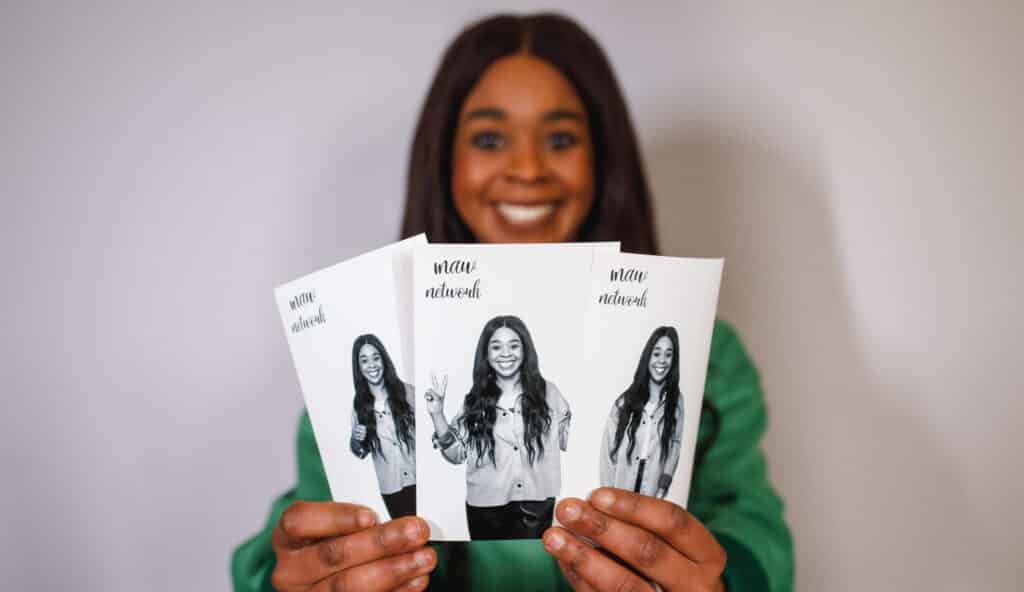
Imagine your guests stepping out of a photo booth at your wedding or corporate event. They are laughing, holding props, and taking one more photo before heading back to the party. A few seconds later, a fresh print comes out of the printer. It is sharp, bright, the skin tones look natural, the colours feel right, and the paper has enough weight to feel like something worth keeping.
Now imagine the opposite. The photo is dark, faces look washed out, the logo is fuzzy, or the print feels like a thin piece of paper that was pushed through a home printer. Both experiences can come from a “photo booth with prints,” but the equipment and service behind them can be very different.
If you are comparing photo booth rentals in Washington, DC, photo booth print quality is worth looking at before you compare packages. The printer matters, but so do the camera, lighting, paper, template, technology, and person running the booth.
What Actually Determines Photo Booth Print Quality?
Photo booth print quality is the result of several parts working together, from the moment the camera takes the picture to the moment you hold the finished print. A high-end printer cannot make a poorly lit photograph look professional, and a great camera cannot compensate for poor printing.
Think of the process as a chain. Your camera captures the image. Your lighting determines how your guests and their surroundings appear. The software prepares the photograph and applies the template. The printer puts that image onto the paper, and the paper determines much of the final feel and finish.
That means two companies can offer the same 4×6 print size and produce very different results.
The Camera
A professional DSLR or mirrorless camera can capture considerably more image detail than a basic webcam or inexpensive camera. That becomes particularly noticeable in faces, hair, clothing, and darker areas of the photograph.
For you, the practical question is simple: do the sample photos look crisp and natural, or do they look soft and flat?
The Lighting
Lighting has a huge effect on the finished photograph. Good lighting can give you even skin tones, clear facial detail, and balanced exposure. Poor lighting can leave faces too dark, create harsh shadows, or introduce unwanted colour casts.
This matters especially at evening receptions, darker event spaces, hotel ballrooms, and venues where ambient lighting changes throughout the event.
The Printer
The printer is responsible for turning the digital image into the physical keepsake. For professional events, dye-sublimation printers are widely used because they are designed for fast, consistent photo printing and produce prints that can be handled immediately.
The Paper
Paper affects more than appearance. It contributes to the weight, texture, colour reproduction, and overall impression of the finished photograph.
The Operator
Equipment still needs someone who knows how to use it. Lighting, printer supplies, paper, templates, and unexpected issues all need to be monitored during an event. This is one reason an attended photo booth can provide a different experience from an unattended DIY setup.
Photo Booth Technology Advancements Are Changing The Experience
Photo booth technology advancements have changed what a modern photo booth can do, but the fundamentals of a good photograph still matter. Better cameras, faster printers, improved lighting, digital sharing, AI-powered experiences, and more sophisticated event software have expanded what you can offer your guests.
A modern photo booth can combine a physical print with a digital version of the same image. Depending on the service, guests may be able to receive their photos through digital delivery while also taking home a physical keepsake.
That creates more opportunities for corporate events and branded activations. Your physical print can become part of the event experience while the digital image gives guests something they can share after the event.
Technology should support the experience rather than distract from it. If the final photograph is poorly lit or the print quality is weak, having more features will not solve the underlying problem.
Why Dye-Sublimation Printing Matters
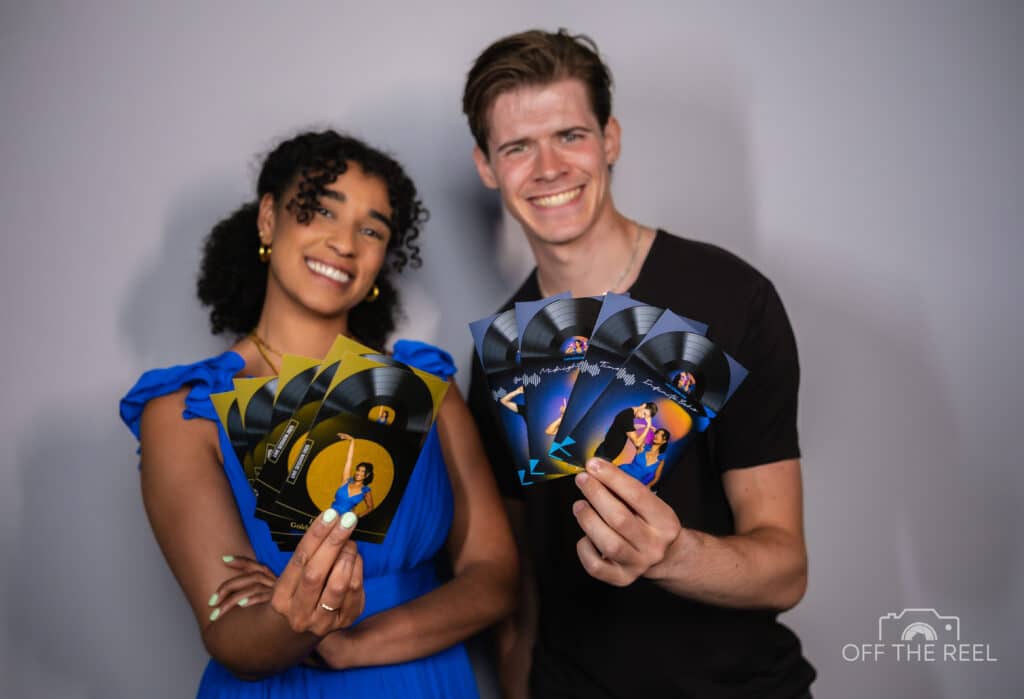
If you want guests to walk away with prints immediately, dye-sublimation printing is one of the most important technologies to understand. Unlike an inkjet printer, which places liquid ink onto paper, a dye-sub printer uses heat to transfer dye into specially coated media and applies a protective finish.
The difference becomes obvious when guests are moving quickly through a booth.
A dye-sub print comes out dry and ready to handle. Someone can pick it up, show it to a friend, put it into a purse, or add it to a guest book without waiting for ink to dry.
Inkjet printing can produce excellent photographs in the right environment, so it is not automatically a poor choice. However, it is generally less suited to the speed and handling demands of a busy event when compared with purpose-built dye-sub equipment.
For a wedding with guests lining up between dinner and dancing, or a corporate activation where hundreds of people may use the booth, print speed and consistency matter just as much as the first photograph you see.
What Should High-Resolution Photo Booth Prints Look Like?
High-resolution photo booth prints should show the small details that make a photograph feel professional. Look closely at faces, hair, clothing, background details, logos, and other elements that can become soft or pixelated when the image is captured or printed at a lower resolution.
A high-resolution file is important, but resolution alone does not guarantee a beautiful print. The image still needs proper lighting, accurate exposure, a capable camera, and a printer that can reproduce the detail.
Skin tones should look natural rather than overly orange, yellow, blue, or grey. Hair should have visible detail instead of appearing as a dark block. Clothing should retain its texture, and highlights should not be so bright that important details disappear.
Branding should also remain sharp. If your event includes a company logo, sponsor information, event date, hashtag, or other design elements, the text should be readable and the logo should not look pixelated.
When you review a provider’s samples, look for:
- Sharp facial and clothing details
- Natural skin tones
- Consistent exposure
- Clean colour reproduction
- Crisp logos and text
- Even lighting
- No visible streaks or lines
- A sturdy photo-paper feel
One of the best things you can do is ask to see real, physical samples. A photograph of a photograph on a website does not tell you how the actual print feels in your hand.
2×6 Strips Or 4×6 Prints: Which Is Better?
Neither format is automatically better. The right choice depends on the type of experience you want your guests to have and how much room you need for the photograph and design.
The classic 2×6 strip gives you that unmistakable photo booth look. It is compact, easy to keep in a wallet or scrapbook, and works particularly well when you want several smaller frames on one print.
A 4×6 print gives your photograph more room. You can make the image larger and still have space for a logo, event date, branding, or a creative border without squeezing everything together.
For a corporate event, 4×6 can be especially useful when the print is part of the branded experience. For a wedding, either format can work depending on whether you prefer the traditional strip or something that feels more like a conventional photograph.
You can also find square and Polaroid-style formats for particular themes and experiences. The important thing is to see the actual format before you choose it.
How Paper Quality Changes The Finished Print
You can see and feel the difference that good photo paper makes. A print should have enough substance to feel like a keepsake, while its coating needs to work properly with the printer to produce clean colour and detail.
GSM, or grams per square metre, is one measurement used to describe paper weight. Heavier paper generally feels more substantial, but GSM alone does not tell you everything about the quality of the print.
The coating matters too. Photo media is designed to work with the printing process, helping the image reproduce properly and giving the finished print its characteristic surface.
You may also encounter glossy, matte, and satin finishes. Glossy paper tends to produce vibrant-looking photographs, while matte or satin finishes can offer a softer appearance and reduce reflections.
If you are planning a formal wedding, a corporate event, or a branded activation, ask to see the exact paper and finish you will receive.
Fully Customize Your Branded Photo Booth Experience
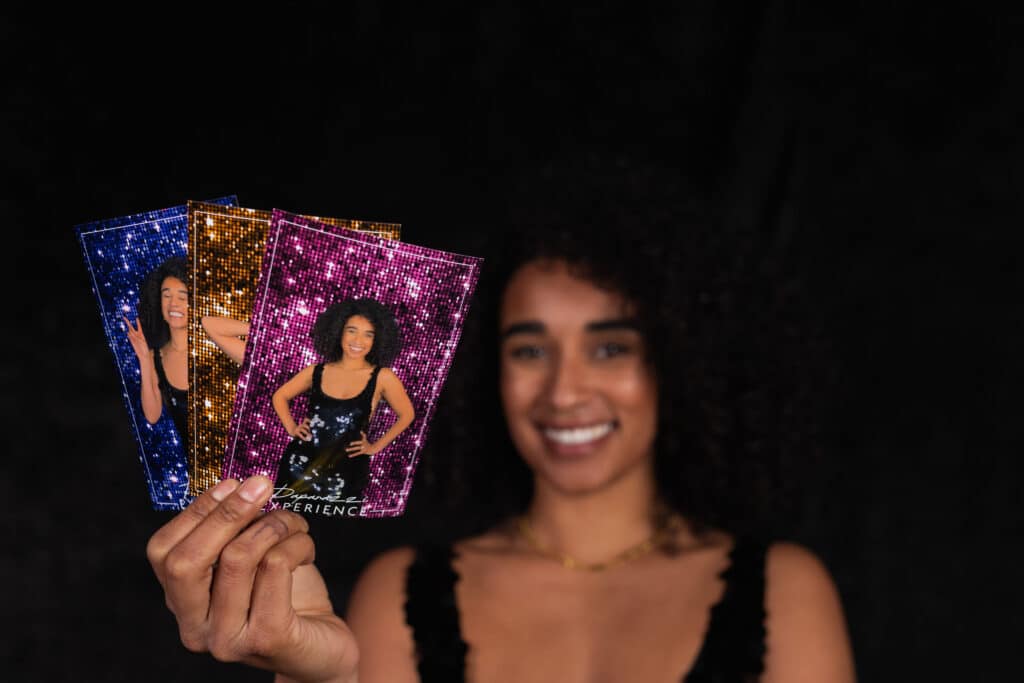
You can fully customize your branded photo booth experiences and allow you to make the photograph part of the event itself. Instead of simply adding a logo to the corner of a generic template, you can consider the colours, layout, graphics, messaging, and overall visual direction that make sense for your event.
For a corporate activation, your print might include a campaign theme, logo, event date, hashtag, sponsor information, or a design that matches the wider event environment.
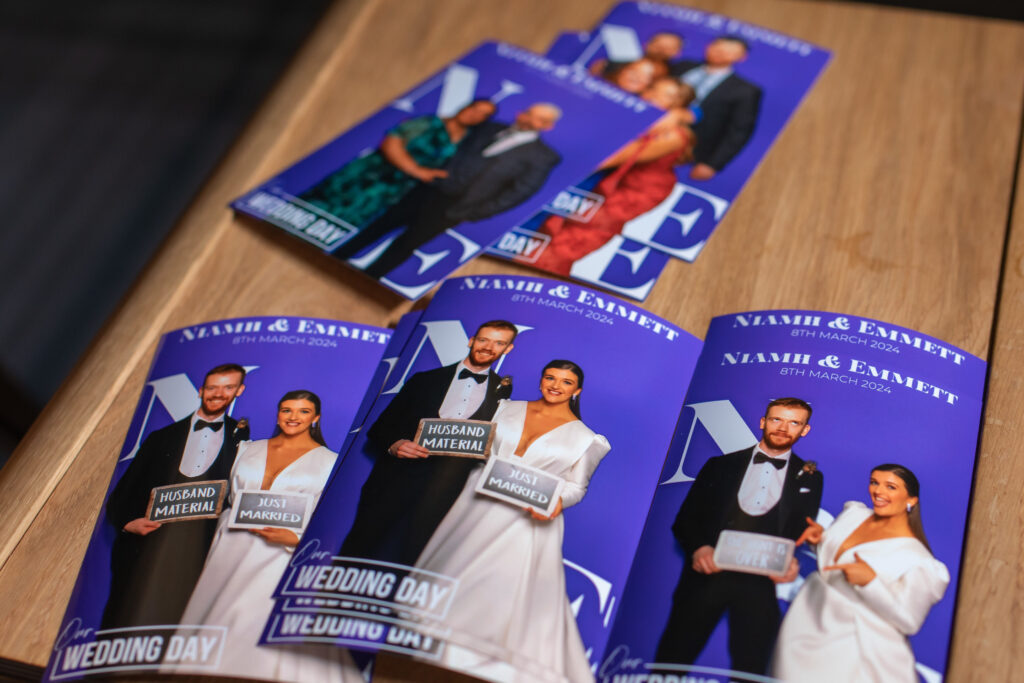
For weddings and private celebrations, customization can be more personal. You might choose names, a wedding date, a monogram, a colour palette, or a design that complements your invitations and décor.
The key is balance. Branding should be visible without taking over the photograph, and every element needs to remain clear at the final print size.
Ask to see your design at its actual print size, not just as a large digital mock-up. What looks perfectly readable on a computer screen can become tiny once it is reduced to a physical print.
How Fast Should A Photo Booth Print?
Fast printing matters because nobody wants a line of guests standing around waiting for their photos. Professional dye-sublimation printers can typically produce a 4×6 print within seconds, although actual speed varies by printer model and setup.
Speed is only half of the equation. The printer also needs to remain consistent throughout the event.
Imagine the first 50 guests receiving beautiful, vibrant prints and then the colours gradually changing, the printer beginning to streak, or the machine running out of media during the busiest part of the evening. That is where equipment capacity and professional event support become important.
Ask how the provider handles high-volume events and what happens if the printer needs attention during the event.
What Does A Professional Print Setup Include?
A professional print experience is about more than putting a printer beside a camera. You are paying for the entire process to work smoothly while your guests enjoy the event.
Depending on the service, that can include professional camera equipment, controlled lighting, dye-sublimation printing, custom templates, quality photo media, an attendant, setup and breakdown, digital delivery, and support throughout the event.
Your venue also matters. A dark hotel ballroom requires a different lighting approach from an outdoor daytime event. A corporate activation with hundreds of guests has different demands from a small private party.
Before booking, tell the provider where the booth will be located, how many guests you expect, whether you need physical prints, and whether you need branding. That gives you a much better basis for comparing services.
How To Compare Photo Booth Rentals Before Booking
The easiest way to compare providers is to ask specific questions instead of relying on package names such as “premium” or “professional.” You do not need to become a photography or printing expert. You simply need enough information to understand what you are receiving.
Ask:
- What type of camera do you use?
- What lighting setup will be used?
- Do you use a dye-sublimation printer?
- What print sizes are available?
- What type of photo paper do you use?
- Can I see an actual sample print?
- Can I see the custom template at the final print size?
- Are prints produced on-site during the event?
- How do you handle printer jams or other technical problems?
- Will someone be available to manage the booth and printing?
A provider that can answer these questions clearly gives you a much better basis for making your decision.
How Much Does A Photo Booth With Prints Cost In Washington, DC?
The cost of a photo booth with prints depends on the service rather than the print itself. Rental time, booth format, number of guests, printing, staffing, customization, backdrop options, digital delivery, setup, and event requirements can all affect the final quote.
When you compare services, make sure you are comparing equivalent packages. One provider may include an attendant, custom design, unlimited printing, digital copies, and setup, while another may offer a package with fewer inclusions.
The least expensive option can be perfectly reasonable when you are hosting a small gathering and mainly want a fun activity. If your physical prints are intended to become wedding keepsakes, corporate branded materials, or part of a larger guest experience, print technology and service quality deserve more weight in your decision.
Common Mistakes to Avoid
Print problems are often preventable when you know what to look for before signing a contract.
- Choosing from digital photos alone: A website gallery cannot show you the physical weight, finish, or true print quality, so ask to see real samples
- Assuming every photo booth uses the same printer: Different technologies produce different results, so ask specifically whether the service uses dye-sublimation printing
- Ignoring the lighting: Even an excellent printer cannot correct a poorly captured photograph, so check the camera and lighting setup as well
- Overloading the template: Too much text or branding can make a small print difficult to read, so keep the design clean and test it at actual size
- Forgetting about guest volume: A setup that works for a small party may struggle during a large activation, so ask about printer capacity and event support
- Never seeing a physical sample: Screen colours and printed colours are not identical, so inspect an actual print before making your decision
- Choosing solely by price: A lower quote may come with fewer services or different equipment, so compare the complete experience rather than one number
Frequently Asked Questions
Are Dye-Sublimation Prints Better For Photo Booths?
Dye-sublimation printing is particularly well suited to photo booths because it produces dry prints quickly and is designed for high-volume event use. The process transfers dye onto specially coated media and adds a protective finish, allowing guests to handle prints immediately.
What Is The Best Photo Booth Print Size?
The best size depends on your event and design. A 2×6 strip gives you the classic photo booth appearance and works well for several frames, while a 4×6 print provides more room for a larger photograph and branding. Ask to see both formats before deciding.
How Do I Know If A Photo Booth Has Good Print Quality?
Ask for physical samples from recent events and examine the skin tones, sharpness, colours, paper, branding, and finish. You should also ask about the camera, lighting, printer technology, and paper. Looking at real prints gives you more useful information than a website gallery alone.
Does Photo Booth Paper Make A Difference?
Yes. Paper affects the appearance and physical feel of your finished photograph. Its weight, coating, and compatibility with the printer all matter. A good provider should be able to tell you what media they use and show you a sample so you can judge the result yourself.
Are Dye-Sublimation Photo Booth Prints Waterproof?
Dye-sublimation prints are generally water-resistant and designed to be handled immediately after printing. However, water-resistant does not mean waterproof in every situation. Storage conditions, prolonged exposure to moisture, and the specific print media can affect long-term durability.
Is A More Expensive Photo Booth Always Better?
No. You may not need a premium setup for a small private gathering where the main goal is entertainment and digital sharing. Paying more becomes easier to justify when you care about physical keepsakes, professional lighting, custom branding, high guest volume, or dedicated event support.
Choose Prints You’ll Want To Keep
Good photo booth prints should capture the energy of the moment and still look good when your guests take them home. When you compare photo booth print quality, look at the complete process, from camera and lighting to printer, paper, design, and on-site service.
At GlitzIQ, we create customized photo booth experiences with attention to the details that shape the final result, including professional technology, high-quality printing, creative design, and personalized service. We can tailor your experience around the type of event you are planning and the way you want your guests to interact with it.
Whether you are planning a wedding, corporate event, celebration, or branded activation, the right photo booth print quality can make the finished keepsake feel worth holding onto long after the event.
If you are planning an event in Washington, DC, contact us to discuss your photo booth needs and create an experience your guests will enjoy and remember.